What is account reconciliation, and how do you actually do it?

TL;DR, the essentials
- Account reconciliation is the act of proving a balance: you compare your own records against a second, independent source and explain every difference until nothing is left unexplained.
- Three reconciliations carry most of the risk in a small business: the bank against the statement, accounts receivable against unpaid customer invoices, and accounts payable against supplier statements.
- At the line level the work is matching: tying each invoice to the payment that cleared it, so what is left open is exactly what is still owed.
- Manual reconciliation means spreadsheets and eyes. Automated reconciliation means a bank feed plus rules on amount, date and reference. Expect automation to clear most lines, never all of them.
- The cases that break naive matching are always the same four: part payments, lump sums covering several invoices, credit notes and small discrepancies.
A receivables balance of $48,200 tells you almost nothing on its own. It could be one invoice that has been outstanding since February, or sixty invoices that were paid on time plus two that were not and a customer payment nobody ever allocated. Until the account is reconciled, the number is just a number, and any cash flow forecast built on it is guesswork.
Reconciliation is the unglamorous habit that turns a balance into information. This page explains what account reconciliation is, which accounts are worth reconciling in a small business, how to match invoices to payments by hand and with software, and the four awkward cases that trip up every automated matching engine.
What does account reconciliation actually mean?
Account reconciliation is the process of checking that a balance in your books is correct by comparing it against an independent record of the same thing, then investigating and resolving every difference. The second record is what gives the exercise its value: your own ledger agreeing with itself proves nothing.
Cash is the clearest example. Your books say the business account holds $12,480. The bank statement says $11,905. Reconciling means explaining the $575 gap: a check issued but not yet presented, a card payment that settled after the cut off, a bank fee you had not recorded. Once each item has a name, the balance is proven. What matters is not that the two numbers are equal, but that the difference is fully accounted for.
There is a compliance reason to care, as well as a management one. UK limited companies must keep accounting records, including details of money received and spent and a record of assets and liabilities, for six years from the end of the financial year they relate to (GOV.UK, company and accounting records, accessed 20 October 2026). In the US, the IRS expects books and records that support the items reported on a return, and the retention period depends on the item (IRS recordkeeping, accessed 20 October 2026). Records that have never been reconciled are records you cannot stand behind.
Which accounts should a small business reconcile?
Textbooks list a dozen reconciliations. In a business under a few million in turnover, four of them do nearly all the work.
| Reconciliation | Your record | Compared against | Frequency |
|---|---|---|---|
| Bank | Cash account in the ledger | Bank statement or feed | Weekly or monthly |
| Accounts receivable | AR control account | Aged receivables list of unpaid invoices | Monthly |
| Accounts payable | AP control account | Supplier statements and open bills | Monthly |
| Card and payment processor | Clearing account | Stripe, PayPal or card settlement reports | Monthly |
| Payroll and tax | Liability accounts | Payroll reports, filed returns | Each period |
The payment processor line is the one most often skipped, and it is where money quietly goes missing. A processor pays out net of fees, so a $1,000 day arrives as $970.90 in the bank. If the gross sale, the fee and the payout are not reconciled through a clearing account, revenue and fees are both wrong, and the error compounds every month.
Does your invoicing tool track payments per invoice?
Reconciliation is only as good as the payment allocation your billing tool hands over.
How do you match invoices to payments?
Inside a receivables or payables account, reconciliation comes down to matching, sometimes called allocation or application. Each invoice is tied to the payment that settled it, so the account only shows what is genuinely open.
| Date | Description | Charge | Payment | Status |
|---|---|---|---|---|
| 04 Sep 2026 | Invoice 2026-0112 | $2,400.00 | Matched | |
| 02 Oct 2026 | Payment received | $2,400.00 | Matched | |
| 18 Sep 2026 | Invoice 2026-0131 | $1,150.00 | Matched | |
| 09 Oct 2026 | Payment received | $1,150.00 | Matched | |
| 07 Oct 2026 | Invoice 2026-0149 | $3,800.00 | Open |
The balance is $3,800, and the status column says why in one glance: a single invoice is still to be collected. That is the whole point. A properly matched ledger produces a trustworthy aged receivables report, which is what tells you which account to pursue first when you follow our sequence on how to chase unpaid invoices.
On the payables side the same idea extends to a three way match: the purchase order, the goods received note and the supplier invoice all have to agree before the bill is approved for payment. If you issue orders to suppliers, our page on what a purchase order is covers how that reference makes matching possible in the first place.
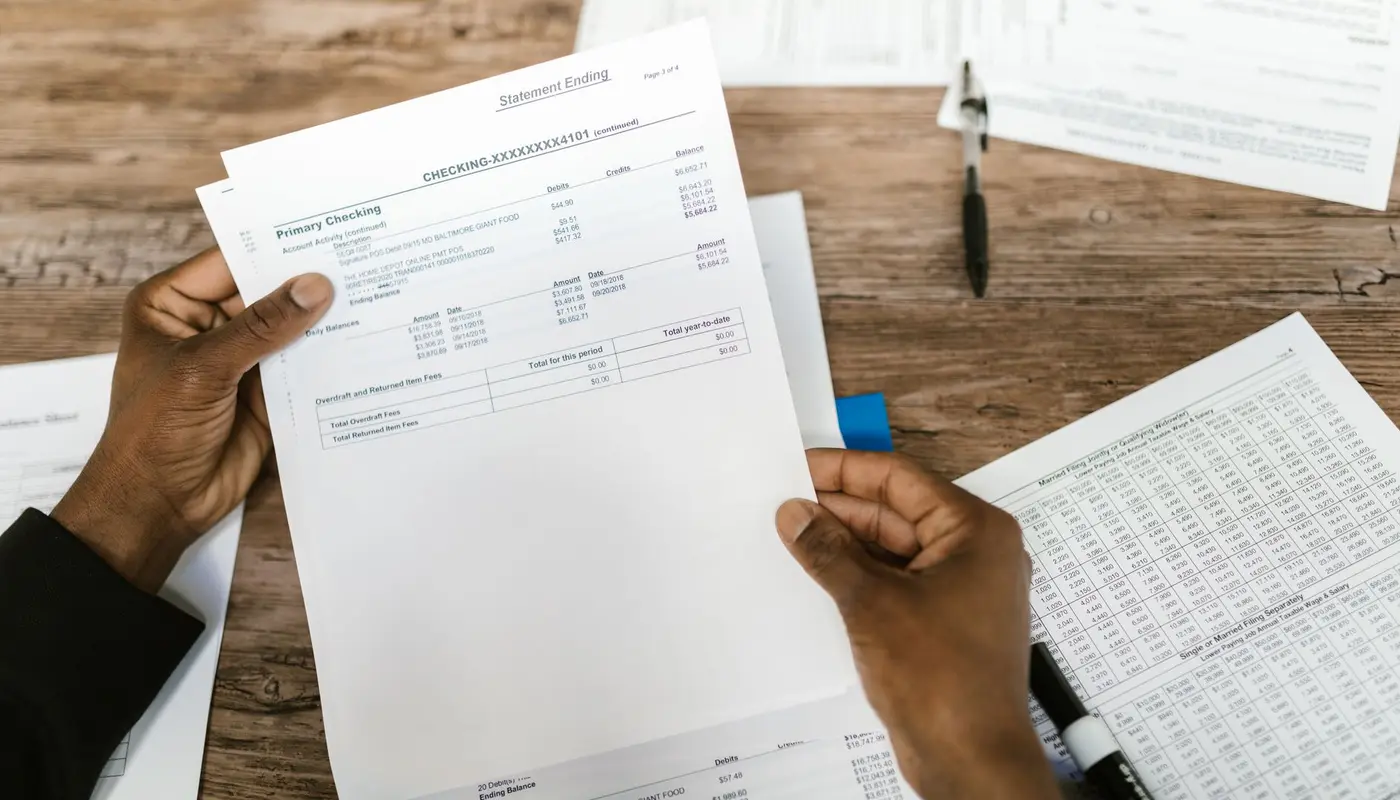
How do you reconcile an account manually?
Manual reconciliation means comparing records by hand, usually in a spreadsheet. It is slow and it is error prone at volume, but it is the method worth knowing, because it is what you fall back on when automation leaves twenty lines unresolved.
Fix the cut off and the opening balance
Pick the period end and confirm that last period’s closing balance was reconciled. Starting from an unproven opening balance means you will chase a difference that was never yours.
Pull both records for the same window
Your ledger detail on one side, the statement or aged report on the other. Same dates, same account, no exceptions.
Tick off the obvious pairs
Sort by amount rather than by date. Identical figures line up immediately, which is where most of the volume disappears in a few minutes.
List what is left on both sides
Items in your books but not in theirs, and items in theirs but not in your books. These two lists are the reconciliation, and each line needs a reason: timing, a fee, an error, an unallocated receipt.
Post the adjustments and prove the balance
Record genuine missing items such as bank charges or interest, correct real errors, and leave timing differences on the reconciliation as explained items. The two sides should now agree once those timing items are applied.
Save the working, then have someone review it
Keep the completed reconciliation with the period. Where you have more than one person, let a second pair of eyes approve it: preparer and reviewer being the same person is the control weakness auditors look for first.
Do this monthly. An account reconciled once a year is archaeology: nobody remembers which invoice a $1,870 transfer from March was meant to cover, and the customer who could have told you has changed their accounts payable clerk twice since.
How does automated reconciliation work?
Automated reconciliation connects your bank and payment providers to your accounting software through a secure feed, imports transactions, and matches them against open invoices and bills using rules. Three criteria do most of the matching, and the fourth is blunter.
| Rule | What the software compares | Reliability |
|---|---|---|
| Reference | Invoice number found in the payment narrative or remittance advice | Very good, when the customer quotes it |
| Exact amount | Payment equals an open invoice to the cent | Good, unless invoices repeat the same amount |
| Date window | Payment falling within a range after the invoice date | Weak alone, useful as a tie breaker |
| Payee rules | Recurring descriptions auto coded to a supplier or account | Fine for expenses, not for invoice matching |
Matching on amount alone is a trap
A retainer client receives twelve invoices of $390 a year. Match on amount and the software will happily pair January’s invoice with August’s payment. The account balance stays correct, so nothing looks wrong, but the aged report is now fiction and you will chase the wrong month. On accounts with repeating amounts, always require a second criterion.
Be realistic about the ceiling. Well configured automation typically clears the large majority of lines and hands you the remainder, and the remainder is where the interesting items live: genuine non payments, unallocated receipts, duplicated bills, credit notes nobody applied. Automation does not remove reconciliation work, it concentrates it on the exceptions, which is a much better use of an hour.
How do you handle part payments, lump sums and credit notes?
Part payments
The customer pays a deposit, or settles in three instalments. Each receipt is allocated to the same invoice, which stays open for the remaining balance rather than being closed. The software should then show a balance due per invoice, which is the figure your collections process needs. The same mechanism carries an advance through to the final bill, as covered in what a deposit invoice is.
One payment, several invoices
A customer sends $5,460 covering three invoices. All four lines are allocated together and the group closes. The risk is the lump sum that matches no obvious combination: leave it unallocated and ask for a remittance advice rather than inventing a split. A forced allocation is worse than an open item, because it hides the question instead of asking it.
Credit notes
A credit note is allocated against the invoice it reduces, and then any remaining balance is settled by payment. Credit notes left unallocated are the single most common cause of a customer account showing a credit balance when the customer owes you nothing and is owed nothing.
Retentions and early settlement discounts
On construction and some service contracts the customer holds back a percentage until sign off, so the invoice legitimately stays part open for months. That is fine, as long as it is documented rather than rediscovered at year end. An early settlement discount, by contrast, creates a genuine difference between the invoice and the cash received, and belongs in the discrepancy category below. Terms like these should be stated up front, which is the subject of our guide to invoice payment terms.
What do you do with a discrepancy?
A payment that does not tie to the cent blocks the match. The usual causes are predictable: intermediary bank charges on an international transfer, a rounding difference at the customer’s end, an unannounced early settlement discount, a foreign exchange movement, or a typo on the transfer.
- Name the cause before you clear it. A $29 shortfall that is a wire fee is a bank charge. The same $29 shortfall because the customer disputes a line is a credit note waiting to happen. Writing both off the same way destroys the information.
- Post real items, do not force them. Bank fees, interest, processor charges and FX differences are expenses or income in their own right and belong in the ledger, not buried in a match.
- Set a write off tolerance, and write it down. Most tools let you clear a difference under a stated threshold, say $2, in one click. Decide the number once, apply it consistently, and tell your accountant. A loose threshold turns billing errors into silent losses.
- Escalate the aged ones. Any unexplained item still sitting on the reconciliation after two periods is no longer a timing difference. It is an error, a dispute or a bad debt, and each of those has a different answer.
Never reconcile by plug
The temptation, at 7pm on close day, is to post the remaining difference to a suspense or miscellaneous account so the reconciliation balances. It balances, but nothing has been reconciled: the difference has simply moved somewhere nobody will look. If you must park it, give it a name, a date and an owner, and clear it next period.
Why does reconciliation matter at month end?
Reconciliation is the backbone of the month end close, and the order matters. Cash first, because every other account eventually flows through it. Then receivables and payables, because those are the balances that drive both your cash forecast and your reported profit. Then the clearing accounts, which should return to zero and are a reliable alarm when they do not.
Two habits make the difference between a close that takes two days and one that takes two weeks. The first is reconciling during the month rather than only after it: a bank feed reviewed weekly leaves a handful of items at period end instead of two hundred. The second is an aging rule for unresolved items, so nothing sits unexplained for more than a stated number of periods.
There is a reporting consequence too. Unreconciled receivables mean you cannot tell a genuinely overdue debt from a mis-allocated receipt, which means you cannot judge what to provide for as doubtful. Businesses discover that gap in the worst possible setting, during an audit or a funding round.
Spreadsheet or software: when should you switch?
A spreadsheet reconciliation is perfectly legitimate at low volume, and plenty of profitable businesses run on one. It stops working for a predictable reason: the input is manual, so every bank line has to be typed or pasted, and typing is where errors and lost evenings come from. The usual trigger for switching is somewhere around a hundred bank transactions a month, or the first time a customer account is wrong and nobody can say why.
What to look for, in order: a direct bank feed rather than file imports, invoice level allocation including part payments, a credit note that can be applied to an invoice, and an audit trail showing who matched what and when. A tool that only categorises expenses is a bookkeeping tool, not a reconciliation tool.
On the market, Xero builds its whole interface around reconciling a bank feed line by line, with list prices of $27 a month for Early, $59 for Growing and $97 for Established, figures taken from its US pricing page on 20 October 2026. Two honest caveats: the Early plan is capped at 20 invoices and 5 bills a month, which makes it unusable for most trading businesses, and automatic reconciliation is listed as a paid add on at $5 a month on Growing while being included on Established. The headline prices are also heavily discounted for an introductory period, so budget on the list price rather than the promotional one.
QuickBooks takes the same approach with deeper reporting and a larger accountant network, listing Simple Start at $38, Essentials at $85, Plus at $140 and Advanced at $340 a month, from its pricing page on 20 October 2026. Its limit is how the tiers are drawn: the automated bookkeeping and reconciliation features that justify the product are concentrated in Plus and Advanced, so the plan most small businesses start on is not the plan the marketing describes. Pricing on both tools changes often, so check it before you buy.
If your main problem is upstream, getting invoices out with clean references and tracking what has been paid, our best invoicing software 2026 comparison ranks the field on payment tracking and accounting export, limits included. Getting the reference and the terms right on the document itself is covered in what to include on an invoice.
Next step
Want a billing tool whose payment tracking survives a reconciliation? See our best invoicing software 2026 comparison, or browse the invoicing hub for the full set of guides.
Frequently asked questions
What is account reconciliation in simple terms?
It is proving a balance by comparing your own records against an independent record of the same thing, then explaining every difference. For cash that second record is the bank statement; for receivables it is the list of unpaid customer invoices; for payables it is the supplier statement. The goal is not for the two numbers to be identical but for the gap between them to be fully accounted for, item by item.
What is the difference between reconciliation and matching?
Matching, also called allocation, happens at the line level: you tie one invoice to the payment that settled it so the invoice closes. Reconciliation is the broader exercise of proving a whole account balance against a second source, which usually involves a lot of matching plus the explanation of anything that will not match, such as timing differences, fees and errors. You can match individual payments all month and still not have reconciled the account.
How often should accounts be reconciled?
Bank accounts weekly if you have any volume, monthly as an absolute minimum. Receivables, payables and any clearing or payment processor account monthly, as part of the close. The argument for frequency is practical rather than theoretical: differences are easy to explain within days of happening and nearly impossible to explain a year later, when the people and the paperwork have both moved on.
How do you reconcile a partial payment against an invoice?
Allocate the receipt to the invoice rather than closing it, so the invoice stays open for the remaining balance. The software then reports a balance due on that invoice, which is the figure your collections process needs, and each later instalment is allocated the same way until the balance reaches zero. The same mechanism handles a deposit taken before the work, with the final invoice showing the full value and deducting the advance.
Is automated reconciliation accurate?
It is accurate when it combines criteria, especially an invoice reference quoted on the payment plus the amount. It becomes unreliable on amount alone, because a customer billed the same figure every month will have payments matched to the wrong invoices: the balance stays right while the aged report becomes wrong. Expect automation to clear the bulk of routine lines and to hand you the exceptions, which are the ones that needed a human anyway.
What should you do if an account will not reconcile?
Work the difference rather than the balance. Check the opening balance was reconciled last period, look for the exact amount of the difference on both sides, then for half of it, which signals a debit posted as a credit, and then for a transposition such as 540 entered as 450. Review anything dated near the cut off, which is usually timing. What you should not do is post the remainder to a suspense account to make it balance, because the difference then simply moves somewhere nobody looks.
Who should perform and review reconciliations?
Whoever keeps the records can prepare them, but a second person should review and approve, because preparer and reviewer being the same individual is a recognised control weakness. In a business too small to split the roles, the usual substitutes are a monthly review by the external accountant and keeping the completed reconciliation, with its supporting statement, filed against the period so the work can be inspected later.